







Voltage is a key aspect of the world of electricity. In our everyday lives, we interact with electrical devices without really knowing the system behind how they work. For example, did you know that voltage is the essential measurement that drives electric current and the key that allows your devices to come to life?
What is voltage?
Voltage, also known as electrical potential difference, is the force that drives electric current through a circuit. It is the energy per unit of charge that an electrical system has and that translates into the ability to perform work.
To better understand what voltage is, imagine voltage as the force that drives the flow of water through a pipe. The greater the pressure, the greater the flow. In electrical terms, voltage is that “pressure” that drives electricity through the wires.
What is electric current and what is its relationship with volts?
Electric current is the amount of current that flows through a circuit and is measured in amperes. It is related to voltage because voltage acts as the force that pushes electrons to move. The higher the voltage applied to a circuit with constant resistance, the greater the electric current flowing through it.
How is voltage measured?
Technically, the unit of voltage is the volt (V), and it is a unit of measurement that represents the amount of electrical energy per unit of charge. A voltmeter is the instrument that measures volts in an electrical circuit.
To explain it simply, imagine you are charging your phone. The tension you feel when touching the charge is related to voltage. Although a phone generally operates at 5 volts, other devices may require different levels.
You should also know that voltage is the same as electrical tension, and both express that force that pushes electrons in a circuit. So, if you were wondering what electrical tension is measured in or how it is measured, the answer is the same: it is measured in volts.
What is voltage measured in?
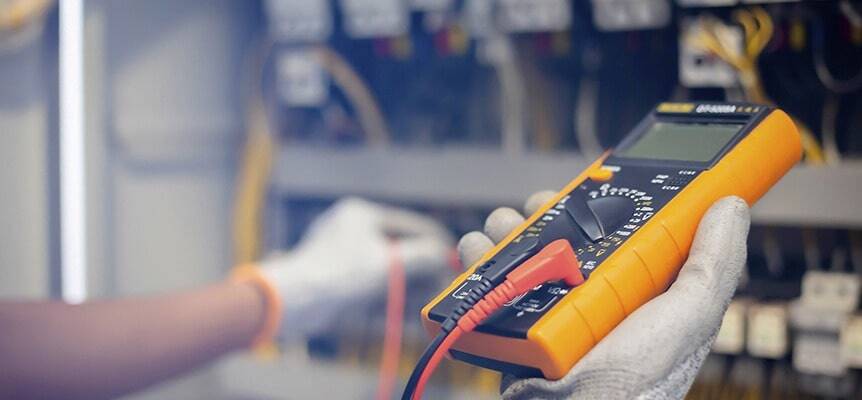
Voltage is measured at various points in an electrical circuit. To measure voltage in different components, a multimeter is used, a very common tool in the field of electricity. By connecting the multimeter leads across a component or circuit, you can obtain the voltage reading. But what is a multimeter and how does it work? In reality, it is simpler than it seems.
It is a device that acts like an electrical detective. It connects to different parts of a circuit and looks for clues at the crime scene. By connecting the multimeter leads to the circuit, we obtain the voltage reading, which is basically like obtaining the measurement of the electrical force. In short, the multimeter tells us how much “electrical pressure” there is in the circuit.
The importance of voltage control
Maintaining a stable voltage is very important for the proper operation of your electrical devices. Too much voltage can damage more sensitive equipment, while insufficient voltage could lead to poor performance. That is why it is advisable to have voltage regulation systems to ensure that your supply is constant and safe.
Debunking myths about voltage
You have probably heard some of the following comments about voltage more than once, but let’s see what is true in all of them.
- Higher voltage, higher consumption: One common myth is that a higher voltage always means higher energy consumption. In reality, voltage does not determine the amount of energy consumed; electric current does.
- Voltage in cables is dangerous: Another frequent myth is that voltage in electrical cables is always dangerous. In most cases, the voltages in domestic-use cables are safe, and the real risk comes from current and a lack of safety precautions.
- Lower voltage is always safer: Electrical safety is not simply reduced to the magnitude of the voltage. Although it is true that extremely high voltages can be dangerous, safety also depends on other factors, such as electric current and the resistance of the human body. Low voltage does not guarantee safety by itself. For example, a sufficiently high current, even at a low voltage, can still be dangerous. In addition, the electrical resistance of the body, environmental conditions and the duration of contact are also determining factors in electrical safety. It is essential to understand that electrical safety is a more complex concept than simply the voltage value.
We hope we have brought you closer to the world of voltage. At Holaluz, we work to bring the world of the electricity sector closer to you in a simple and educational way, so that you can engage with 100% green energy however you want and with all the information you need.





 en
en
